Captivity and Resistance
The Tale of the Vampire BrideCaptivity and Resistance is the conflict shaping Glynis Wright’s life both before and after her transformation: she longs to live beyond the restrictions placed on women, only to find herself confined by vampiric rules and Vlad Dracula’s power. The pattern is not simply physical imprisonment. It reaches into clothing, family ties, her public identity, and the choices she can safely express. Glynis’s resistance develops accordingly, from outspoken refusal to a deliberate effort to conceal her intentions while she searches for freedom.
Confinement Before and After Transformation
Before her supernatural captivity, Glynis had already articulated a desire to live without the constraints imposed on women. She did not describe wanting to abandon womanhood; rather, she wanted the latitude men possessed to act as they pleased. That aspiration gives her later struggle a history: Vlad’s control does not introduce her longing for freedom, but makes its stakes more severe.
After becoming a vampire, Glynis experiences the castle as a prison in which even ordinary self-presentation is regulated. She resents having to exchange her own clothes for an outfit she finds degrading, and regards this forced change as an especially bitter reversal: she had sought release from one restrictive society and found herself trapped in another. Her new existence brings powers and appetites, but not self-determination. The hunger can offer a brief pleasure and sense of power, even as Glynis finds her enjoyment of hunting disturbing; that compromised experience does not erase her sense of enslavement to Vlad.
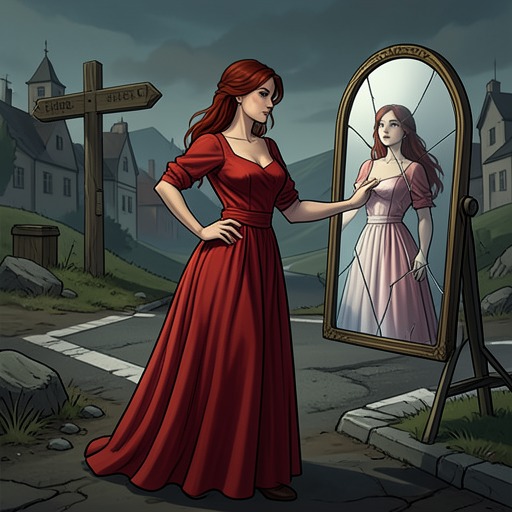
Clothing repeatedly makes the struggle visible. When Elina summons her to Vlad’s library, Glynis takes her favorite blue Italian-silk gown from her own chest and changes into it without putting on a corset. The act is small, but it asserts a preference in a household where her appearance and conduct are subject to others’ demands. Later, while preparing to see Andrew Wright in Buda, she is ordered to wear a veil so he will not recognize what she has become. Vlad also forbids her from taking dresses or jewelry her brother might identify, directing her instead to wear dresses bought by Antoinetta Wright in Paris and jewels belonging to Erzsébet Dolingen. The veil is both disguise and imposed boundary: it helps Vlad manage Andrew’s perception, while physically obstructing Glynis’s own anticipated reunion with him. When she tears it off in frustration, her impatience registers the personal cost of the deception.
Vlad’s Control and the Stakes of Family
Vlad’s authority operates through explicit commands and threats, but also through Glynis’s attachments. He tells her that she will write to Andrew claiming that she has married him and that they are happy. Glynis refuses, naming the deception and declaring that she will not help Vlad reach England and destroy what remains of her family. Vlad answers by asserting that she will do as he says and warning her not to defy him. His control thus extends beyond her person: he attempts to make her participate in a false account of her life and use her family connection to advance his plans.
The threat becomes most consequential when Andrew is expected to come to Buda. Glynis fears that Vlad will destroy him and begs for assurance that he will not be harmed. Vlad insists that he needs Andrew, not his blood, because Andrew can help establish an estate in England and secure an entrance into British society. He wants to avoid frightening Andrew into exposing him to vampire hunters. This practical dependence gives Glynis some leverage, but does not make her brother safe or her own position voluntary. Vlad slaps her when she presses him for a promise, making the violence beneath his assurances unmistakable.
Glynis also recognizes that the blood bond is not the whole of her subjection. She tells Ignatius that Vlad’s power reaches beyond blood: he can strike down what she holds most precious. She expects punishment when she returns, yet understands that Vlad needs her and is unlikely to kill her. The distinction matters. Her survival offers room to maneuver, but it also makes her usefulness part of the mechanism keeping her captive.
Refusal, Strategy, and Unequal Understandings of Freedom
Glynis and Cneajna interpret their vampire lives in opposite ways. Cneajna regards Vlad as the one who freed her from mortal life and urges Glynis to obey him, believing he is wise and will act in their interests. Glynis, by contrast, sees the vampire life he imposed as another prison. She understands that Cneajna’s account of freedom does not fit her own experience: what one woman regards as liberation, the other recognizes as subordination.
That disagreement sharpens Glynis’s decision. She does not answer Cneajna’s pleas by revealing her resolve; instead, she promises to obey, while inwardly hardening herself against Vlad. She concludes that open defiance is unsafe and that escape will require cunning and restraint. Her compliance is therefore strategic rather than a change of allegiance. She intends to curb her speech, watch for an opportunity, and outwit the person who commands her.
Her rebellion nevertheless continues to break through. When she asks Vlad to teach her to defend herself, she frames the request in terms of her value to him, demanding that he treat her as valuable property. The wording exposes the trap: she attempts to bargain using the very status that denies her independence. Vlad responds by throwing her across a room and repeatedly striking her; her bones and injuries heal, allowing the violence to continue. Her repeated effort to rise makes resistance bodily and persistent, even where it cannot yet prevail.
The Meaning of Resistance
Glynis’s captivity is sustained by more than locked spaces or direct commands. Vlad can dictate what she tells Andrew, what she wears around him, and how she must answer the call that draws her back to her master. He also uses her love for her brother as a pressure point. Against these controls, her resistance takes several forms: choosing her own gown, refusing to help deceive Andrew, demanding the means to protect herself, and concealing an escape plan behind apparent obedience.
The conflict also distinguishes freedom from the mere absence of mortality. Cneajna can see vampirism as release, while Glynis experiences it as a new system of constraint. Nor does the promise of movement to Buda or a future position as Vlad’s first bride amount to independence: those prospects remain conditional on loyalty and serve his plans for England. Glynis’s central achievement in this phase is therefore not escape itself, but recognizing the terms of her confinement and adapting her resistance to them. Her outward promise to obey becomes a shield for an inward refusal to accept Vlad’s authority as rightful.